Contact Us For Consulting!
We are here to help you. You can reach us from the section below.
I consent to the processing of personal data and accept the user agreement and privacy policy


Showing all 2 resultsSorted by latest
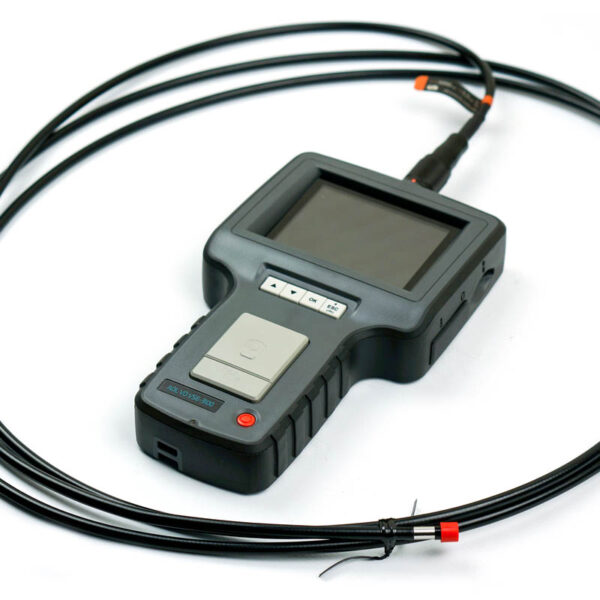
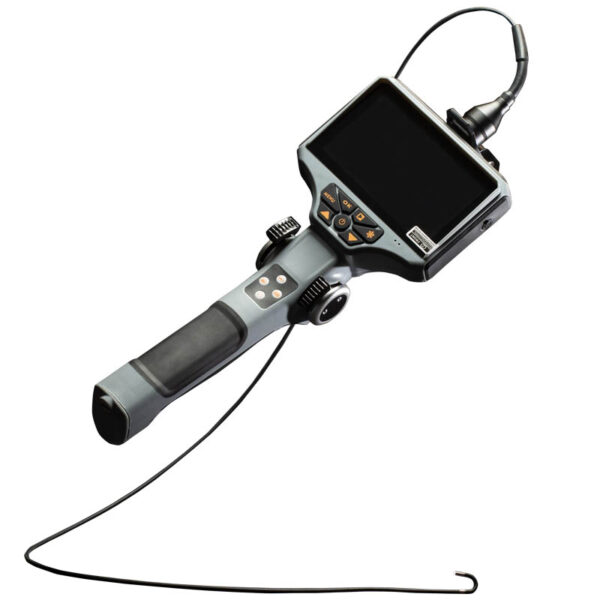
Industrial video endoscopes are offered in the "non-destructive testing" section of the Adelix website.
At Adelix you have the opportunity to purchase an industrial video endoscope suitable for visual inspection. The price of a video endoscope is determined depending on the model and equipment.
Technical endoscopes are devices used for visual inspection of the inner surfaces of products without disassembly. The generalized term "Endoscope" is generally used in relation to the entire range of industrial optical instruments, including rigid borescopes and flexible fiberscopes. Flexible instruments equipped with a camera are often called video endoscopes.
In such devices, the fiber optic bundle is replaced by electronic components that increase the resolution and the maximum length of the working part. Modern video endoscopes provide much higher resolution than fiber optic fiberoscopes.
When choosing a technical endoscope, you should first decide for what tasks it will be used and, based on this, choose a device with the appropriate technical characteristics, without overpaying for functions that will not be useful in the future.
The price of endoscopes depends on your technical tasks. Adelix specialists are available to provide advice and assistance in selecting technical endoscopes for specific purposes.
Boroscopes (rigid technical endoscopes) are devices consisting of a rigid optical tube with a lens at the distal end and a lens at the opposite (proximal) end. Rigid endoscopes are used to examine the inner surface of simple geometry products that do not require bending of the workpiece and mobility of the distal tip. The borescopes can be equipped with a video camera to transfer the image to a monitor or computer. The main advantage of rigid endoscopes is their high resolution and relatively low cost. The length of the working part of rigid devices usually does not exceed 1000 mm.
Flexible endoscopes (fibroblasts). In such devices, the image and light transmission systems consist of fiber optics mounted in a flexible tube with a controllable distal end. Such devices are used to examine inaccessible places for rigid endoscope. The major disadvantage of flexible endoscopes compared to rigid ones is the lower resolution and length limitations associated with the properties of the fiber.
Semi-rigid endoscopes are a kind of flexible ones. The working part of the equipment is covered with a fastening shell, which ensures fixation in a predetermined position. This shell allows the working part of the endoscope to maintain the given bending shape. In many cases, this design allows for more comfortable viewing of hard-to-reach spaces than with a fully flexible endoscope.
Video endoscopes are flexible endoscopes with video transmission capability. In such devices, the fiber optic bundle is replaced by electronic components that increase the resolution and the maximum length of the working part. The resulting image can be viewed on a regular monitor or an external device.
Energy industry: control of thermal engineering, electrical and other equipment of power plants. Including visual inspection of cooling ducts, windings of electric generators and transformers, inner walls of pipes.
Water supply and sewerage: endoscopy of sewer pipes. Look for cracks, corrosion, blockages, cracks and foreign objects. Monitoring the state of the flow path of pumping systems.
Metallurgy: maintenance of production equipment and quality control of castings and other parts with complex geometries.
Aerospace: visual inspection of the condition of power units, combustion chambers, tank walls, turbine blades, compressors, projectiles, nozzles, nozzles and hydraulic systems.
Mechanical engineering: quality control and control of the technical condition of the manufacture of various machine components and parts, for example mold cavities, mechanical transmission parts, bearings, pipelines, cavities of brazed and welded structures.
Car services: automotive endoscopes are used to inspect engine elements: valves, cylinder liners, teeth, gears, etc. Also for the control of pneumatic systems, welding quality and body painting.
Construction and architecture: visual inspection of floor elements, internal voids, fittings and waterproofing of walls, condition of pipelines.
Gas distribution stations: monitoring the condition of vanes, combustion chambers, fuel system and other components of gas compressor units, checking for erosion, corrosion, deposits and fatigue cracks in valves, gate valves, pipelines, separators and other components.
Chemistry and petrochemistry: internal inspection of pipelines, pressure vessels, heat exchangers, pneumatic automation units and other devices.
Rail and maritime transport: inspection of diesel and electric motors, generators, transformers and other units.
To purchase an industrial video endoscope, you need to go to the contact information below and contact us in a way that suits you. The price of a video endoscope is negotiated individually and depends on the configuration.